Jack Tramiel, was the president and C.E.O. of Commodore, He started Commodore back in the "Good Old Days" the mid '70's,
even made a Commodore "Milk shake mixer" as well , later producing an excellent 4 function calculator, leading on through to
the Commodore PET series of 8K, 16KB and 32KB business machines and on to the Vic 20, C16, C64, C128, C128D and The Plus 4
computer. Some say he was an innovator, though that kudo must go to the (then) dedicated Amiga engineers and visionaries of that time

Mr. Jack Tramiel or as he was previously know in Lodz as a young boy, Idek Tramielski
So, as the story goes, Jack started his life in a garage with his Type writers, with sales and service as the corner stone,
his small business grew to be a very successfully one from such humble beginnings.
So it goes without saying,.......Jack was a man of persistence, a man with a mission, to survive in "his new country, America
Jack Tramiel was born in Poland, he was born in September 1928 in Lodz, Poland in 1939 the war started and that's
the time when he, to a certain extent left Poland. Auschwitz was still in Poland but it was not Poland for Jack.
During the war, Jack was in Auschwitz in the Nazi run concentration camps altogether for five years and a few months.
His parents were to perish in the Nazi camps....victims of Nazi experiments and unbelievable cruelty at the time.
After liberation and the bitter end of World war two, the Germans were defeated by the combined efforts of the Allies and America?
Jack Tramiel spent two years in Germany from April 10th 1945 till November 19th 1947.
In November 1947 I left Germany and went to the United States as a poor Jewish immigrant with absolutely no
money at all when I arrived in the States, Jack stated "I'm Jewish, that's the reason I was in that camp" and
a Jewish organisation paid for my ticket and they also gave Jack 10 dollars spending money.
When Jack arrived he was in a hostel like which was done by the Jewish Immigration Association and for
three weeks I had to find my own way and I started to work for whatever job I could find.
But, when Jack did arrive in New York, Jack did not believe that he was still in the United States. Why?
Because it was just like being back in Poland, same language, the area he was in it had lots of immigrants
and it had the same smell of pickles and of herring and all that which was very nice but this is not what
Jack came for.
Jack made the decision that the United States was extremely good to him, he was liberated by the Allies and the
Americans and he felt he wanted to learn more about America so Jack Tramiel joined the army, mainly to learn the
English language and to get a vocational training, and at the same time Jack attended an IBM school for office technology.
It was also there where he learnt how to repair electrical typewriters. When he left the army after three years and
seven months, he used this knowledge for a job as mechanic.
Jack Tramiel had joined the army and it did him a lot of good to learn all about America because it was a peopledom.
Washington State, from California, from Texas and from New York and black and green and white - all kinds of
different people, and he soon found that America is not New York City only, there is much more to it.
Then Jack left the US army and after two years and the Korean War started and he was recalled, but he was still lucky
that he was not shipped to the front and there the second time around he made a decision that he'd better learn a trade,
and the army gave that opportunity to start repairing office equipment like typewriters and adding machines etc.
Before long, he was left in charge of the First Army Office Equipment Repair Department which we had something like
25-thousand pieces of equipment in there for repairs and when he left the army he actually continued working in the same field.
Now, the question was.....to Jack, was that the genesis of your interest in computers.
Of Course it was, 100% Correct and during the day Jack was working in an office equipment repair shop, at night he
was driving a Taxi-cab to be able to feed his family and after a while he decided he'd better use his allowance
which he received from the United States Army, he was entitled to borrow US$25-thousand dollars from the bank with
a government guarantee.
Jack apparently actually took that money and he started his own business, his own little shop and after he had done
that he found that New York City in which he was in the Bronx, it was just a little too big, people were too smart
and US$25-thousand dollars which is not enough.
Jack's wife had lots of family, she's was also a survivor, also from Poland, and she had a lot of family in Toronto
and we used to go there every once in a while, so they decided to move to Toronto and it was there Jack repaired again
working on the typewriters and the adding machines in a company by the name of Sears Roebuck liked my services and
they asked me if there was a possibly could find a way how he could assembly a typewriter for them.
Being young enough and foolish enough he figured out it's an easy task, as long as you have money you can do
almost anything.
Well, Jack got a neat US$176-thousand dollar loan from Sears and he started to try to find a license to build typewriters.
Well no American or West European country or company wanted to give me a license, so he wound up getting a license
from Czechoslovakia.
Jack actually brought 50 technicians over the counter, his company started building typewriters and also built so many that they
could not sell them all in Canada so, he had to start exporting them back to the States and that's the way Commodore started.
Fascinating history about a man with a mission.
The Amiga was about to be born.......
The first commercially produced Amiga was the AMIGA A1000 with a lengthy 68 Pin dual in line 68000 processor
running at 7 MHz (NTSC) clock speed, 256 KB RAM, packaged in a very neat, very tidy aesthetically pleasing,
compact desktop case, offering the unique feature of a place to house the keyboard neatly, under the front of the A1000.
As an "OPTIONAL EXTRA", a 256 K add in ram module was offered to upgrade the machine to a full half a megabyte...
wow! , a half meg multitasking computer ..awesome in 1985 ! later on, a PAL conversion "MODIFICATION" was fitted
to all Australian NTSC to convert the NTSC CVBS to PAL CVBS, because of its high technical nature,this was done
by a AMIGA technician, however consider this, full applications would actually run on half a meg of ram...unreal eh?
Most 1985-86 software that was "correctly written" in that era by programmers who strictly followed
the Commodore-Amiga guidelines, that same software still works even today on the newest and fastest
68060 66MHz machines of 1992-98, but its day, it was indeed a milestone, no other computer came near it,
other platforms looked on awe, at its beauty, its neat size and more noticeably, its screen colours, all 4096
out of a palette of 16.7 million . It stood alone!. Unchallenged , No-one had a all-purpose, pre-emptive
multi-tasking computer that actually spoke to you in computerised voice ( a bit like the character "Darth Vader"
from StarWars®) and played sounds and recorded sound files (IFF's) and ran a thing called a "SIDECAR"
to run MS-DOS of the day , we at Unitech Electronics Still keep one, it still runs flawlessly today 18 years
later !( in 1998)
Jack had some mighty fine ideas, but was frustrated by external technology, or the lack of it, that is why there are so
many custom chips in an Amiga, there were no specialised "off - the - Shelf " chips that would do what he wished, so
he set up a design team of top engineers and forward thinkers and called it Commodore Semiconductor Group (CSG)
which used to manufacture all of Commodore's Chips, resulting in the technology which set Amiga apart from any other
technology to this very day in 2001, and things took off from there.
Jack sold off his interests in Commodore buying the ailing ATARI Company, which he bought for a bargain back then,
he "Commmodore-ised" its technology and went on to produce the Atari range of computers, complete with a MIDI
interface as standard, making the musicians of the world very happy in the process.
It is interesting to note, that Jack's design team at Atari designed the chips and had them custom made by " C S G "
( Commodore Semiconductor Group) for his Atari Computers.
In that same year 1986, Mehdi Ali, was employed at Commodore as a consultant for Dillon Reed by Mr. Irving Gould.
Later, Mr. Medhi Ali would take up the posting as C.E.O. of Commodore with Mr. Irving Gould, some would dispute
this as a turning point.
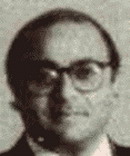 - - - - - - - - - - - - - -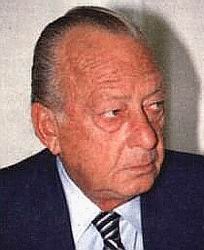 Mr Mehdi Ali - - - - - - - - - - - - - -A Picture of Mr Irving Gould
A lot of older "other platform" machines couldn't boast these features on any of their models.
It was soon realised that the AMIGA A1000 was somewhat limited in expandability and cost heaps to
produce and manufacture, so it was decided in Commodore Westchester USA, to produce a mass market
machine, one that would rival the old legendary Commodore C64. The AMIGA A500 became the leading
home computer succeeding the Commodore C64 by far, while the introduction of the first A2000 for
Commodore Braunschweig, Germany , meant that AMIGA was cemented in place in computing history books,
with its vast expansion capabilities via many useful slots and bays, became the absolute work horse
for the computing professional and all his or her applications.
The A3000 followed numerically, and sporting the Faster Motorola 68030 processor as standard and the
ECS (Enhanced Chip Set) giving it newer screen resolutions along with a flicker fixer that gave the
screen a "velvety" smooth screen image that was comfortable to the eyes. .
Shortly afterwards, the tall and rather solidly built AMIGA A3000 Tower appeared, now this was a solid
machine, it was "touted" as being the only AMIGA that you could have a party on the roof and not fall in :-).
It had all the right slots, the power to run many extra cards, unix and many other goodies.
Later in 1991, the small and shortened AMIGA A600 was introduced, as a show of the will of the then,
Commodore management, it was forced onto the engineers to drastically cut manufacturing costs and so,
reluctantly, they slashed off the numeric key-pad, thus reducing the size and costs at the same time,but as
a downside, the small size ultimately effected the expandability of the A600, quite a considerable amount
of A600's were sold to schools, due to their attractive price point and this made it easier to penetrate to
some degree of success, the home and entertainment market with this small ECS home computer .
The Commodore CDTV was the first serious CD-ROM Multimedia device in the world back in 1991, the first to
grace living rooms and for educational purposes. IT was a combination of many ideas and inspirations, but
wrongly marketed, it was ahead of its time, just how many CD-Rom players could you speak of in 1990 that you
could play excellent AMIGA games on, listen to your favourite music CD, view your Pictures on CD, have a SCSI
hard drive within, have a keyboard, infra-red mouse and infra-red remote controls in 1990 that were computers
none other that the AMIGA CDTV come to mind. The CDTV sported a full 1 megabyte of chip ram and PCMCIA
slot also.
When were the Amigas first introduced ?
The Amiga 1000 was introduced in October 1985 in the USA and in November 1985 in Australia and to the rest of the world.
REALLY ANCIENT AMIGA HISTORY.
The Amiga A1000 shipped with OS 1.0 in mid October 1985 and was sold throughout the U.S.A,
it was a full NTSC machine, these to were introduced to Australia in late November 1985,
the NTSC (National Television Standards Committee) or (Never Twice the Same Color) versions
had to be converted to PAL-D (Phase Alternating Line-Delayed) with a small engineering
modification from Commodore Technical, Hong Kong.
The main significant features like pre-emptive multi-tasking, full 32-bit architecture, and
Auto-config were all there from day one as rigid design disciplines that remain the features by
which separates the AMIGA range from other platforms today.
Other platforms are imitating the AMIGA concept , but lack the serendipity of design concept of
the original "AGNUS", part of what is the heart of the AMIGA, developed, in part by the original
AMIGO-Lorraine consortium , from Florida. a few years earlier.. As OS 1.1 (December 1985) still
contained some rather ugly bugs, it was soon followed by OS 1.2, (also had bugs, but lesser now),
which also had a restyled user interface making it more stable and that phrase "user friendly".
With the progression to OS 1.3 in 1988, came the ability to boot from a hard disk. 1.3 made its name as a
BETA OS 1.4 which lasted quite some time until it emerged as OS 2.0 brought a complete radical redesign of
the graphical user interface or GUI, this became a new buzz-word in computing terms. OS 2.0 had some additional
smart capabilities, and supported the ECS chip set. OS 2.1 added support for international languages in "Locale".
Down the track, late in 1992 OS 3.0 appeared in A1200 added further nice cultured features, like the
Datatypes, plus support of the AA (Advanced Architecture) or The "Double A chip set."
The most current version today is OS 3.1, with its many other new features, like a CD-ROM filesystem, and is usable
also on older Amigas without the AA chip set. It is available for all Amigas, in a variety of single chip for A500 and
A2000, and twin chips for A3000, A4000 and A4000T, the amazing thing is that even the oldest 1987 Amiga 500
with only 1 MB of chip ram will run OS3.1, with no problem , try that on any other platform.
|